Pure Sport Images: Turning Highlights Into High-Impact Visuals
Sport photography is supposed to freeze motion, but the real craft is what happens after the shutter. A highlight shot can look great on the day. The trick is turning that moment into a visual that still hits hard at the end of a season, on a billboard, or inside a sponsor’s email when someone scrolls past everything else.
I’ve built my workflow around one idea: a pure sport image is not just technically correct. It’s a composition with intent, a file that survives delivery pressures, and a final look that respects the athlete, the event, and the viewer’s attention. That applies whether I’m shooting from the edge of a Melbourne oval, photographing a weekend competition, or covering a higher-profile match where every frame becomes part of a larger story.
Below is how I approach it at Pure Sport Images, with practical decisions you can actually use, including the trade-offs that don’t show up in the gear reviews.
The difference between “a good sports photo” and “a high-impact image”
A good sports photo is often defined by sharpness and exposure. High-impact images are defined by attention. People stop scrolling because something in the frame feels inevitable. The best ones usually have at least two things working at once: a decisive subject, and a background that supports the energy instead of competing with it.
In a game, that might mean timing the peak expression, the exact stride where motion lines feel clean, or the instant a player turns their head to show focus rather than just movement. Out in the world, it might mean delivering a crop that holds up inside a social post while still looking intentional, not like an afterthought.
One of my early lessons came during a local basketball night in Melbourne. I had a set of frames that were all technically sharp. The first upload looked fine, then the client shared a favourite from the same sequence that I hadn’t even flagged. It was the one where the ball was slightly blurred, but the athlete’s body language was perfectly readable, shoulders forward, eyes locked, and the opposing player’s arms formed a clear visual boundary. That frame felt like the story, even though it wasn’t the “cleanest” file. It taught me that pure sport imagery sometimes earns its impact by making a small, deliberate compromise.
Start with the shot, not the edit
The easiest trap is thinking post-production is where the image becomes powerful. Editing can elevate, but it cannot reliably fix the fundamentals. The fundamentals are: focus discipline, framing choices, and exposure that won’t fall apart when you push contrast and colour later.
Focus and timing, especially under Melbourne conditions
Melbourne conditions can be gorgeous for photography and still be annoying for accuracy. Bright sun can be harsh, clouds can shift quickly, and stadium lighting can introduce flicker. If you rely on “whatever looks sharp,” you’ll eventually end up with frames that are crisp in the wrong place.
My approach is simple: I decide where focus must land and I build the sequence around that decision.
- For fast, head-forward action like football sprints or soccer breaks, I prioritise the face and upper torso.
- For aerial moments, I lock onto the predictable part of the flight path, then let the body blur where it adds speed.
- For contact sports, I aim for the moment before impact when eyes and posture are most expressive, because the instant of collision can be both chaotic and physically hard to read.
When you shoot enough sports photography in Melbourne, you learn which venue lighting behaves well and which one demands changes. Some venues produce stable results with standard AF behaviour. Others reward a slower, more deliberate technique and tighter control over your shutter speed.
Framing that gives the viewer a job to do
Every high-impact sports image gives the viewer a pathway. Your eye should know where to land first, then where to travel. That pathway is built by composition, not just lens choice.
I often look for a background that can act like a stage. Fence lines, goal frames, tunnel-like structures, and repeating advertising panels can create depth. The key is avoiding clutter that competes with the subject. A player can be sharp and still feel lost if the background is screaming for attention.
If you’re photographing from the sideline or behind a barrier, you also have to consider angle. Shooting straight-on can reduce drama. Shooting too high flattens the subject. A small change, even a step left or right, can turn a flat scene into one that looks like motion is pushing forward.
The Pure Sport Images mindset: deliverable visuals, not just frames
A client does not buy “a set of photos.” They buy an outcome. That outcome might be a gallery, a highlight reel used for social content, or a handful of images that represent their brand.
I treat my workflow like a production pipeline. It includes capture choices, a sorting method that respects time, and edits that are consistent enough to feel like a coherent story.
This is where working as a Melbourne sports photographer makes a difference. Events happen on real schedules. Some competitions start early and run late. Other venues have strict access rules. You can’t afford to spend half a day editing one moment while the rest of the event waits.
When I shoot sports photography in Melbourne, I’m usually thinking in two layers at once: the immediate hit for online posts, and the longer-term selects for clients who want a cleaner, more polished look.
Editing for impact, not for Instagram looks
Editing is where you shape emotion. High-impact sport images tend to share a few traits: strong contrast where it matters, colour that supports the team identity, and tonality that keeps faces readable even when the scene is bright.
The danger is over-processing. Over-sharpening can create halos around players and makes skin look synthetic. Over-saturation turns jerseys into plastic. Over-contrast can destroy the gradations in a sky or the texture in grass.
I edit with a “use-case in mind” mindset. If the image will be used as a web post, I protect the readability at smaller sizes. If it will be used in a https://www.wordofmouth.com.au/reviews/pure-sport-images printed context or a sponsor layout, I protect midtones and avoid crushing the shadows.
Contrast and colour discipline
A strong sports edit usually has contrast anchored in the subject. If you simply bump global contrast, you often deepen noise and clip highlights. Instead, I prefer to guide contrast locally, using adjustments that lift faces and jersey details without flattening the rest of the scene.
Colour should feel like sport, not like a filter. When teams wear uniforms with specific colours, you’re handling brand identity. Slight changes can be acceptable. Wild changes are not. The same goes for skin tones under mixed lighting.
One practical technique I use is checking the image at two magnifications. First, I review at a zoom where faces and jersey lines are clear. Then I zoom out to “human distance,” where the whole composition reads instantly. If it looks good at distance, the edit is probably doing its job.
Sharpening and motion: the balance that sells the moment
Sharpening choices can make or break motion storytelling. Pure sport images often look sharper not because every pixel is maximised, but because the subject edges remain crisp while the background falls naturally out of focus.
If you’re capturing action with a fast shutter speed and using a lens with solid contrast, you might only need modest sharpening and careful noise management. If you had to compromise shutter speed due to darkness, you might rely more on motion blur for aesthetics rather than trying to brute-force sharpness.
The key is to avoid “fake detail.” When you oversharpen a noisy file, you get harsh edges that look unpleasant on skin and can make hair texture look crunchy. Viewers feel it even if they can’t explain it.
Choosing the hero frame: when “perfect” isn’t the winner
A common frustration for photographers is ending up with frames that are technically impressive but emotionally weaker. Meanwhile, a less perfect frame can win because it communicates something instantly.
When I’m selecting hero images after a shoot, I look for:
The athlete’s intent. You can see it in posture, hands, and gaze. Even in a split-second sequence, there’s usually one frame where the body language is unmistakable.
The clarity of the story. If the moment reads in a single glance, it will perform better across formats. This is especially true for sports photographer Melbourne clients who post fast to meet engagement windows.
The compositional strength. Is the subject anchored? Are there distractions? Is the background helping?
And yes, technical factors still matter. I won’t choose a hero frame that’s soft on the face when faces are the entire point of the image. But I’m willing to prefer the emotionally readable frame over the one with perfectly frozen motion if that readability is the difference between a casual viewer and someone who stops.
Fast delivery without losing quality
Clients often need images quickly, particularly for match reports, club updates, or sponsor content. That requirement pressures the workflow. Pure Sport Images aims to deliver strong results without turning edits into a rushed mess.
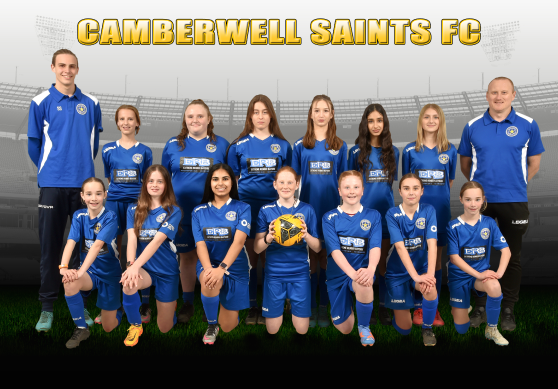
The way I keep quality consistent is by creating a repeatable approach that still leaves room for judgment.
A practical triage method
After a session, I do a first pass to filter out obvious misses, then I focus on sequences. Sports photography is rarely one frame. It’s a sequence of similar moments, where small timing differences change the story.
Here’s how I triage in a way that saves time:
- I remove frames that missed focus completely or have unusable exposure.
- I identify sequences where the subject changes expression, body angle, or spatial position.
- I flag a small set of “candidate” hero images, usually fewer than you think.
- I review candidates at both full view and web view, checking that the face and jersey details remain readable.
- I edit only what earned the chance to be edited.
That method keeps the work proportional. It stops you from spending 30 minutes polishing an image that would never land.
Why Melbourne venues change your settings and your decisions
Whether you’re a Melbourne sports photographer for local clubs or a professional sports photographer Melbourne covering bigger competitions, venue realities shape your results. Stadiums with controlled lighting can be consistent, while outdoor venues can vary wildly within minutes.
A few examples I’ve run into:
- Outdoor games near dusk: highlights blow easily, and shadows swallow detail unless you expose with care.
- Indoor arenas: flickering lights can cause inconsistent colour and exposure across frames.
- Venues with bright walls or advertising panels: these can throw unwanted reflections and create weird contrast patterns.
The most important point is that you can’t edit your way out of inconsistent capture. Your editing can correct for exposure and white balance issues, but it cannot fully rescue images that were captured too far from the usable range.
So the “impact” part begins with disciplined capture decisions. That discipline is what separates consistent work from lucky work.
From highlight to high-impact: building a visual narrative across an event
A lot of sports galleries fail because they read like random moments. You get one great shot, then several okay shots, then the gallery drifts. The viewer doesn’t get a sense of the match unfolding.
A high-impact gallery behaves more like a story. It sets context, shows effort, and delivers key turning points. Even if you only deliver a handful of images, the selection matters.
In practical terms, I try to include variety in the set: one moment of tension, one moment of success, one moment of teamwork, one moment that shows the physicality of the sport, and a few frames that capture emotion rather than just action.
That variety is not about being different for the sake of it. It’s about making the viewer feel the match rather than just see it.
The gear question, answered the way it matters for results
People ask about lenses, bodies, and whether a particular setup is “best.” Gear matters, but the impact comes from using it well in the specific constraints of sport coverage.
A longer lens can help isolate the subject and simplify backgrounds, but it also makes it harder to capture the whole scene when timing is tight. A wider angle can add context and show scale, but it can also exaggerate perspective and make faces harder to read unless you shoot carefully.
More important than gear is readiness: having settings that work when play accelerates without forcing you into constant changes. If you’re always fiddling, you will miss the decisive moment.
A compact “on event” workflow checklist
I keep my own session checklist short so I’m not stuck reading it during play. When you’re in the Melbourne sports photography environment, you learn to keep the process simple.
- Confirm camera settings for the venue lighting before the match starts.
- Choose AF behaviour and verify it tracks athletes reliably.
- Set an exposure approach that won’t clip faces or jerseys.
- Plan your position, where you can see the play and anticipate movement.
- Identify one or two focal “styles” for the set, like portraits in action and wider storytelling frames.
That list is not about being rigid. It’s about reducing hesitation when it counts.
Capturing emotion, not just athletic motion
Motion is visible. Emotion is readable. High-impact sport images are the ones where both are present.
Emotion appears in micro-moments, and you usually have to anticipate rather than react. The pause before a kick. The inhale before a sprint. The glance toward a teammate after a successful pass. If you wait until the emotion arrives, you’re late.
That’s why I shoot longer sequences rather than short bursts of single “perfect” moments. In most sports, the most compelling frame sits just outside your initial expectation, and it arrives because you stayed with the flow long enough.
A practical example from a Melbourne match: during a tight contest, I spent a moment waiting for a dramatic play. Then the player missed the shot. Everyone expected disappointment. Instead, the athlete turned their head, jaw set, and gestured toward a teammate. It wasn’t a highlight, but it communicated the energy of the team. That’s the kind of frame that gets used in match reports and internal club pages because it feels human.
Handling the hard edge cases: no light, cluttered backgrounds, and chaos
Sports photography often includes moments that refuse to cooperate. Motion blur happens. Focus fails sometimes. The background might be messy. The action might happen right where you have the worst line of sight.
High-impact visuals come from how you handle those moments without letting them derail the assignment.
If the light drops fast, I adjust shutter speed early rather than waiting until everything is ruined. I accept that some frames will be noisier, then I use noise management carefully in editing. If the background is chaotic, I reposition if possible, or I crop with intention if you have enough resolution and the subject stays readable.
When action becomes chaos, I switch tactics from “perfect freeze” to “story freeze.” That means prioritising frames where body language is clear, even if some movement looks softer. The goal is a frame that reads instantly, not a technical trophy.
Consistency is what makes Pure Sport Images feel professional
When clients look at your work, they judge you by consistency more than by individual brilliance. A single stunning image is great, but consistent style is what builds trust.
Consistency shows up in:
How your colours look across matches. How your exposures sit, especially in bright daylight or mixed lighting. How you handle noise in darker venues. How your crops preserve faces and jersey details for readable storytelling.
A professional sports photographer Melbourne audience often expects images to suit multiple platforms. That means your edit should work at both large gallery sizes and smaller feeds. A colourful, dramatic edit that collapses into darkness at smaller sizes will feel inconsistent. A disciplined edit stays solid everywhere.
Pure Sport Images is built on this idea: the highlight is the start, not the finish. The real win is when the highlight becomes a visual asset that still feels strong days later.
Delivering impact: choosing formats, crops, and final presentation
The final output is part of the image. It sounds obvious, but photographers sometimes treat delivery like an afterthought.
If your crop chops a player’s face or removes the direction of motion, you lose impact. If your final resolution is too low for web use, it may still look okay on a phone, but it will struggle for sponsor slides or local media use.
When I deliver sets, I think about:
Where the images will be viewed, screens or prints. How much cropping the client typically applies. Whether the image needs space for text overlays. How the jersey colours will hold up in smaller resized files.
Good crops are not just technical. They’re decisions about what the viewer should feel first.
Building your own style without turning it into a gimmick
Many photographers end up with a style that’s really a filter. It makes everything look the same. Sports is too varied for that.
A better style is built from principles that adapt to the sport. My principles are centred on realism with intent: strong subject clarity, contrast that supports readability, and colour that respects team identity. Motion is treated as part of the story, not an error to hide.
That approach keeps your images recognisable across seasons and venues. It also keeps you responsive, because the edit should follow the moment, not the other way around.
If you want your work to feel like it belongs to Pure Sport Images, focus on what stays true from frame to frame, even when lighting and sport change.
What to do next if you want your highlights to hit harder
If you’re taking your own sports photos and you want the leap from “nice shots” to high-impact visuals, the most effective changes are usually not about new gear. They’re about decisions:
Shoot for readability, not just sharpness. Edit with local control, protect skin tones and jersey details. Select a hero frame based on emotion and composition, not only technical perfection. Deliver crops that keep the story intact.
Sports photography Melbourne is competitive, but the audience is simple. They want images that feel like sport, not like technical exercises. Turn your highlights into high-impact visuals by treating the entire pipeline as part of the craft, from the instant you anticipate the moment to the final crop that arrives ready for use.
If you’re looking for a consistent, professional approach, that’s exactly what a Melbourne sports photographer should deliver. And when you do it right, the difference is obvious, even to people who don’t know cameras. They just know it looks like something worth stopping for.
Pure Sport Images
23 Grandview Ave, Mulgrave VIC 3170, Australia
+61 413 157 614
[email protected]
Website: https://puresportimages.com.au/